
Dimension and packaging review
Measure orderable units, carton requirements and dimensional-weight exposure; flag oversize, restricted or damage-sensitive gear before quoting.
Sporting goods span lightweight accessories, apparel, gear bundles and items that need special packing. Palletized maps SKU dimensions, seasonal demand, accessory completeness and channel routing so consumer shipments and retail replenishment do not compete for attention.
Manage bulky gear, assembly steps and dimensional shipping economics.
Get My Customized Proposal ↗
We map the product details, seasonal demands, sales channels and service requirements of your category into practical receiving, pick/pack, value-added and returns procedures—designed with your team before launch.
Explore all solutions↗Not every SKU should be handled the same way. These are examples of operational designs we can scope with your team, based on accepted products, volumes and agreed service levels.
Measure orderable units, carton requirements and dimensional-weight exposure; flag oversize, restricted or damage-sensitive gear before quoting.
Create pick lists or BOM checks for products shipped with manuals, straps, attachments or multiple components.
Forecast launch calendars and events; plan inbound staging, replenishment and high-volume pick/pack windows with the operations team.
Ship individual eCommerce orders, team kits, event drops or replenishment cartons with separate packing and labeling workflows.
A sport brand launches a training kit with five components and a branded card. We validate the BOM, establish quality checkpoints, agree pack dimensions and reserve an inbound/outbound plan around campaign dates.
Measure orderable units, carton requirements and dimensional-weight exposure; flag oversize, restricted or damage-sensitive gear before quoting.
Create pick lists or BOM checks for products shipped with manuals, straps, attachments or multiple components.
Forecast launch calendars and events; plan inbound staging, replenishment and high-volume pick/pack windows with the operations team.
We confirm specific handling, compliance and service requirements before onboarding. These are examples of how the eHub can be configured, not an automatic SLA guarantee.
Plan packout around weight, size and product protection.
Bundle accessories and assemble products using documented SOPs.
Coordinate batch releases, team orders and B2B deliveries.
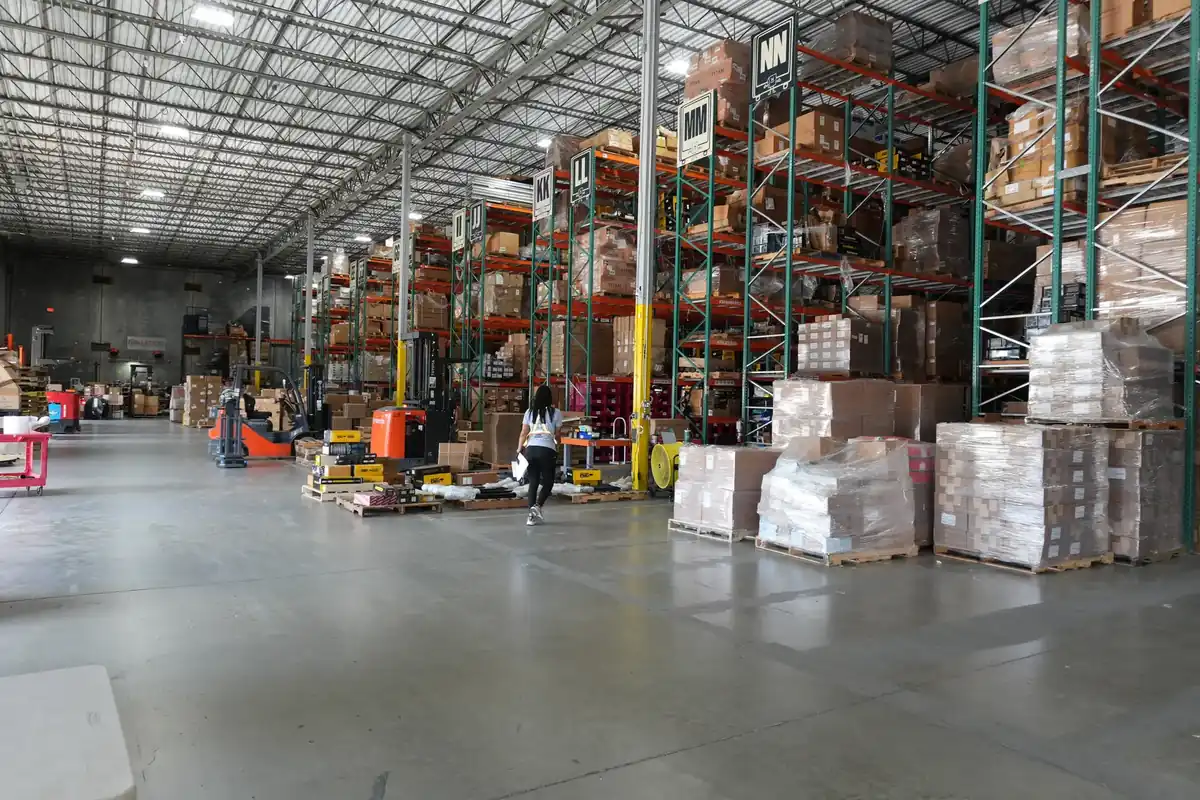
Our real eHub has storage and handling space for approved sporting goods and related B2B and DTC workflows.
Tech first. Human always.Value-added services are scoped to your SKUs and brand standards. Pair the right capabilities with your membership and sales-channel mix.
Assemble sets with accessories, stickers, training cards or branded sleeves.
Explore capability →Select inserts, void fill and carton configuration for gear dimensions.
Explore capability →Prepare pallets, cartons and route-specific distributions.
Explore capability →Product & service acceptance: Oversize items, lithium batteries, fuel-powered equipment, weapons, pressurized articles and hazardous materials require a product-specific acceptance and carrier review; no blanket support is implied.
Get clarity on the practical questions before you hand off inventory.
We can scope assembly, component verification and branded packout for accepted items.
Peak-volume readiness is planned against forecasts, staffing, inbound inventory and the service agreement—not guaranteed without a capacity review.
We evaluate dimensions, weight, packaging, labor and freight routing before confirming support.
Sporting goods create challenges that small-parcel apparel rarely sees: large cartons, heavy products, accessories sold together and items that arrive unassembled. A fulfillment solution should begin with product dimensions and shipping profiles, then design how components are received, assembled, packed and routed.
Record actual dimensions and weight for each package configuration. Review carton right-sizing, protective materials and carrier service eligibility to keep chargeable dimensional weight visible before launch.
Where approved, stage multi-part products with clear assembly work instructions. Scan the components, perform QA against a checklist and release the finished good under an appropriate identifier.
Build team packs, accessory bundles or starter gear kits ahead of opening day. Forecast kit components and labor separately from normal order volume to avoid assembly backlogs.
Separate individual gear orders, bulky marketplace labels and wholesale pallet programs. Each lane can require different cartons, routing guides and cutoff agreements.
The following hypothetical scenarios illustrate how workflows may be scoped. They are not published customer case studies or guaranteed service levels.
A brand sells equipment with a seasonal March spike. A capacity plan covers inbound parts, team-pack kitting, oversized parcel labels and scheduled replenishment to retailers.
A shipment arrives in components. The agreed project includes assembly, a function/visual check and optimized packaging before product release.
Questions buyers should ask when evaluating a third-party logistics partner for this product category.
Assembly and quality checks can be scoped for accepted products after reviewing required skills, instructions, tooling and liability.
Carriers may rate parcels on dimensional weight. Right-size cartons and accurate master data can reduce avoidable space, but rate outcomes depend on carrier contracts and package profiles.
Not generally. Extra receiving space, product handling, cartons, shipping carrier options and team capacity may be needed.
Tell us a little about your brand, order volume, channels and product requirements. We’ll review your needs and prepare personalized next steps and a proposal tailored to your operation.