
Inbound and pack hierarchy
Define unit, inner pack, case and pallet identifiers; reconcile inbound quantities and investigate variance before replenishment.
Fast-moving products call for disciplined replenishment, pack sizes, promotional configurations and inventory visibility. Palletized supports qualifying consumer packaged goods with DTC parcels, B2B case picking, pallet moves and promotion-ready rework from a single Miami operation.
Keep high-velocity goods replenished, correctly packed and retail-ready.
Get My Customized Proposal ↗
We map the product details, seasonal demands, sales channels and service requirements of your category into practical receiving, pick/pack, value-added and returns procedures—designed with your team before launch.
Explore all solutions↗Not every SKU should be handled the same way. These are examples of operational designs we can scope with your team, based on accepted products, volumes and agreed service levels.
Define unit, inner pack, case and pallet identifiers; reconcile inbound quantities and investigate variance before replenishment.
Configure agreed counts, location practices and lot/expiry tracking for eligible products when applicable.
Separate each-pick, case-pick and palletized orders according to order profile and channel documentation.
Support relabeling, display assembly, rework or multipack creation where scoped, with retailer-specific shipping paperwork.
A CPG brand promotes a three-unit pack across its website and retailers. We map individual packs, promotional bundles and wholesale case configurations to separate order workflows.
Define unit, inner pack, case and pallet identifiers; reconcile inbound quantities and investigate variance before replenishment.
Configure agreed counts, location practices and lot/expiry tracking for eligible products when applicable.
Separate each-pick, case-pick and palletized orders according to order profile and channel documentation.
We confirm specific handling, compliance and service requirements before onboarding. These are examples of how the eHub can be configured, not an automatic SLA guarantee.
Prepare case and pallet orders to relevant retailer requirements.
Scope promotion schedules, co-packing, multipacks and bulk shipments.
Plan cycle counts, SKU velocity and inventory replenishment cadence.
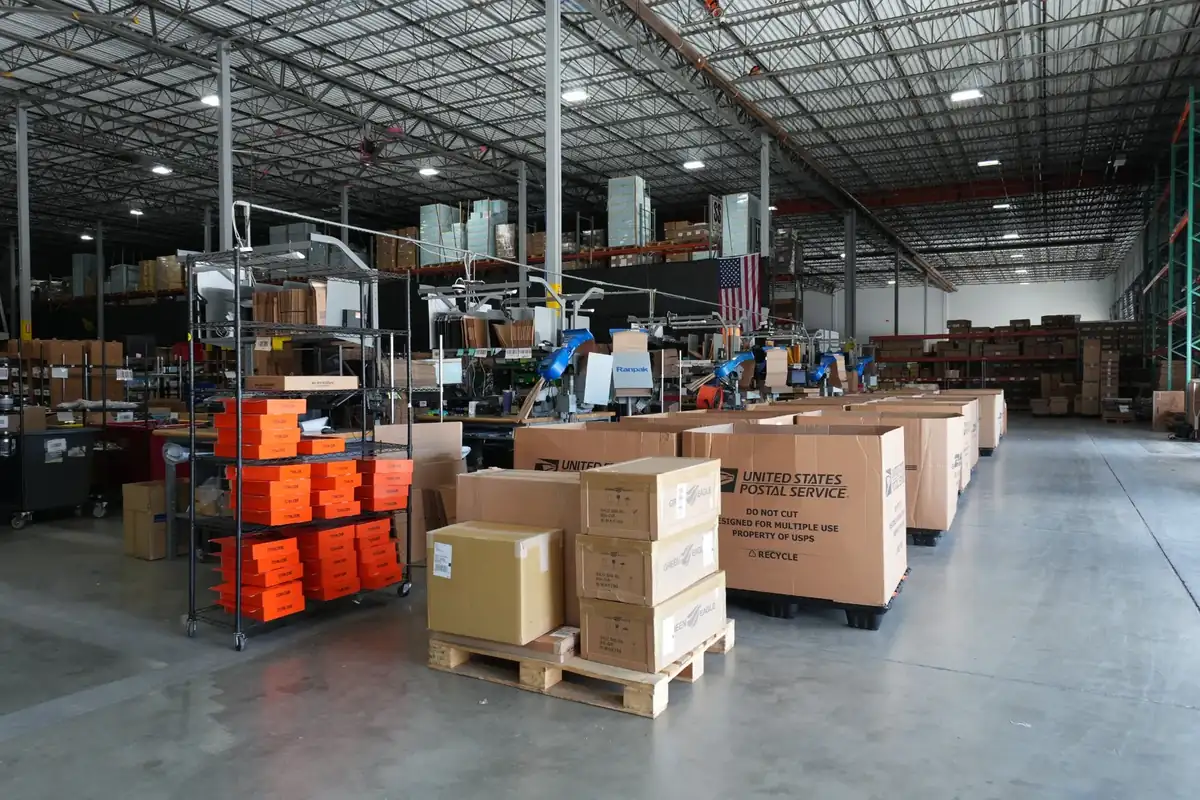
A real view of the Palletized operation supporting receiving, preparation and outbound shipments.
Tech first. Human always.Value-added services are scoped to your SKUs and brand standards. Pair the right capabilities with your membership and sales-channel mix.
Bundle accepted units into promotional configurations.
Explore capability →Track qualifying SKUs by lot/expiry when required.
Explore capability →Coordinate pallets and scheduled distribution moves.
Explore capability →Product & service acceptance: Food, beverages, cosmetics, chemicals and other regulated CPG categories require product-level eligibility review; no temperature control, food-grade or hazardous storage certification is claimed.
Get clarity on the practical questions before you hand off inventory.
Yes, the program can support each-pick and B2B case/pallet fulfillment from mapped units of measure.
We can scope rework, relabeling and bundle assembly with component counts and QA steps.
Lot/expiry capture can be considered for accepted products based on onboarding data, WMS setup and documented workflows.
FMCG and household staples call for repeatability. The operation has to distinguish individual consumer units, inner packs, master cases and pallets; maintain high-turn replenishment; and follow retailer routing and labeling requirements. EDI can support this process when the retailer, integration partner and document mappings are confirmed for the account.
Define pack hierarchy in product master data so eaches, cases and pallets have accurate conversion factors. Receiving and picking plans then reflect how each channel orders the product.
Where integration scope supports it, coordinate EDI 850 purchase orders, 940 warehouse instructions, 856 ASNs and 810 invoicing with the responsible providers. Test every partner-specific field and exception before production.
Slot high-velocity SKUs where practical, plan cycle counts and reconcile shortages. Agreed inventory and order reporting gives the brand visibility before promotional periods.
Case picking, label placement, pallet configuration and stretch/shrink wrapping can be defined to the account’s routing guide. A compliance review can reduce avoidable retailer chargebacks without guaranteeing their elimination.
The following hypothetical scenarios illustrate how workflows may be scoped. They are not published customer case studies or guaranteed service levels.
A personal-care staples brand ships individual Shopify orders while replenishing a regional retailer in mixed cases. The two channels require distinct pack hierarchies, labels and dispatch scheduling.
A brand plans a limited-time retail promotion. The operations team forecasts case inventory, promotional bundles, pallet labels and routing needs before the purchase orders arrive.
Questions buyers should ask when evaluating a third-party logistics partner for this product category.
Many retailers require EDI. A program may involve 850, 940, 856 and 810 documents, but available flows and ownership must be validated for each retailer and integration.
Yes, where agreed. Different pick paths and packaging standards support eaches, master cases and pallet replenishment.
Receiving accuracy, pack hierarchy, tested labels, routing instructions and exception escalation can reduce avoidable errors; retailer fines cannot be guaranteed away.
Tell us a little about your brand, order volume, channels and product requirements. We’ll review your needs and prepare personalized next steps and a proposal tailored to your operation.